Activist
As a Mexican immigrant, Dr. Garcia experienced firsthand the racial injustices that defined the lives of countless Americans. Working with and through the AGIF, he became a tireless champion for civil rights. He firmly believed that citizens could be agents of change, and advocated non-violent, civic solutions to discrimination and segregation. From school sit-ins to voter registration drives, Dr. Garcia led a movement that effected real change in his community and far beyond.
Encountering Racism
Dr. Garcia made it his mission to put an end to the deeply entrenched racism and discrimination that defined the Mexican American experience in the first half of the 20th century. Civic activism was central to Dr. Garcia’s approach. He effectively mobilized the AGIF expansive network to organize marches, launch protests and boycotts, and support civil rights legislation and lawsuits.
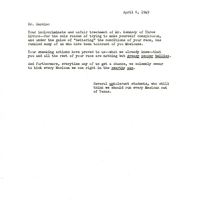
Hate Letter sent to Dr. Hector P. Garcia
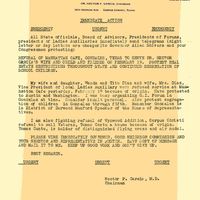
Urgent Notice, American GI Forum
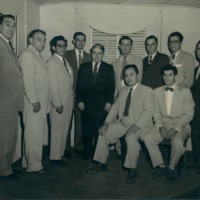
Hernandez v. Texas Attorneys
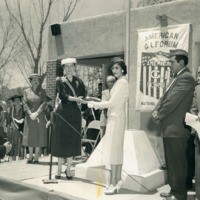
AGIF Flag Ceremony
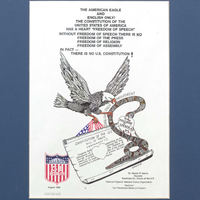
English-Only Movement Poster, American GI Forum
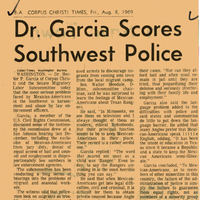
Dr. Garcia Scores Southwest Police
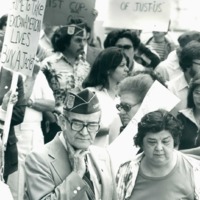
Dr. Hector P. Garcia at Protest
Championing Education
The AGIF motto reflects one of Dr. Garcia’s deeply held beliefs: “Education is our freedom and freedom should be everybody’s business.” Dr. Garcia worked to ensure that all children had equal access to a quality education. He led campaigns encouraging migrant workers to enroll their children in school, promoted school health inspections, and championed legal battles to end school segregation.
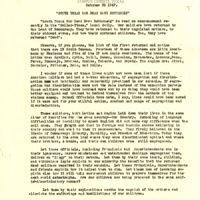
South Texas War Dead Have Returned
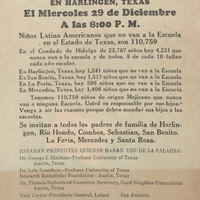
Back to School Rally Flyer, American GI Forum
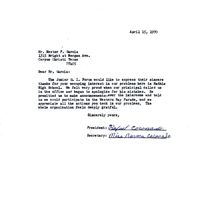
Letter from Rafael Coronado and Norma Coronado, Junior GI Forum, to Dr. Hector P. Garcia
18 Stage School Board Sit-In
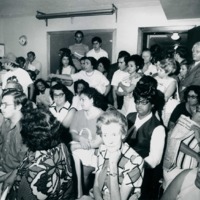
School Segregation Protest
Enfranchising Mexican Americans
For Dr. Garcia, the voting booth was a place where Mexican Americans could not only participate in democracy but also change its course. The AGIF spearheaded a major campaign to remind people to register to vote, pay their poll taxes, and get to the polls on voting days. Dr. Garcia encouraged voters to cast their ballots for Mexican Americans and for candidates dedicated to civil rights.

Aviso Importante! 'Poll Tax' [Important Announcement! 'Poll Tax'] Flyer, American GI Forum
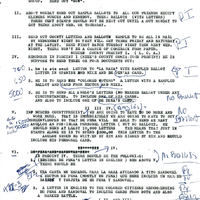
Master Plan for the Campaign, Dr. Hector P. Garcia
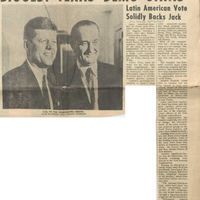
Viva Kennedy Clubs Deliver Biggest Texas Demo Gains
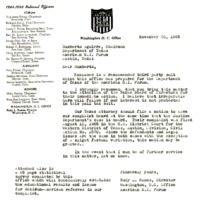
Letter from Rudy L. Ramos, American GI Forum, Washington D.C. Office, to Humberto Aguirre, American GI Forum, Department of Texas
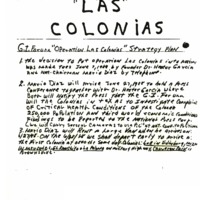
Improving Living and Working Conditions
Dr. Garcia was appalled by the conditions in Mexican American barrios (neighborhoods), in migrant labor camps, and in the poverty-stricken towns on the Texas-Mexico border, known as colonias. He focused on improving quality of life for Mexican Americans in the home and in the workplace. Other prominent civil rights activists of the time, including Dr. Martin Luther King, Jr. and Cesar Chavez, praised these efforts.
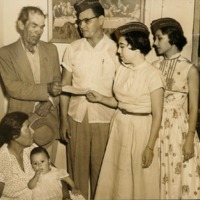
AGIF Members Present Check to Guadalupe Vera and Family
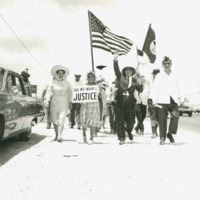
Dr. Hector P. Garcia at Protest March
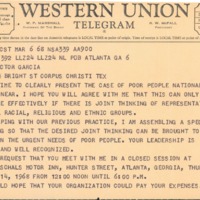
Telegram from Dr. Martin Luther King, Jr. to Dr. Hector P. Garcia
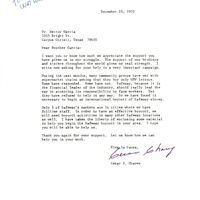
Letter from Cesar E. Chavez to Dr. Hector P. Garcia