Empowerment Through Education: Building the 1st Health Professional Program in South Texas

By: Analisa Garcia
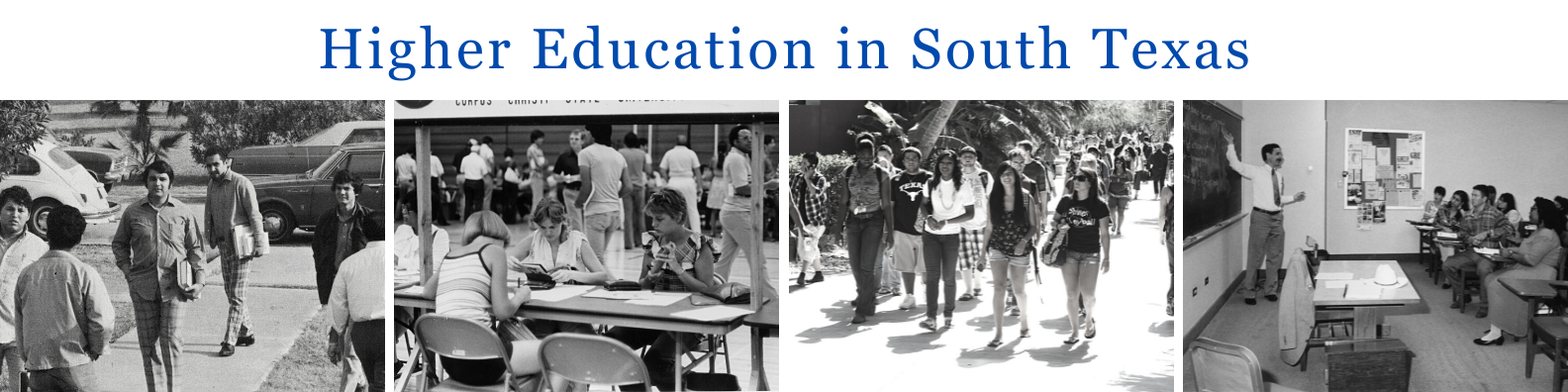
The Texas A&M Irma Lerma Rangel College of Pharmacy was established with the passing of House Bill 1640 and opened its doors in the fall of 2006, marking a historic milestone as the first professional health school in South Texas—a vision created to address critical healthcare shortages in the region and provide accessible professional health education. Named in honor of State District 35 Representative Irma Lerma Rangel, a advocate for educational equity, the college opened on the Texas A&M University–Kingsville campus with a mission to expand access to health care and create opportunities for students in underserved communities. Today, the college offers a fully accredited Doctor of Pharmacy (Pharm.D.) program, with the option to earn a Master of Business Administration (MBA) concurrently. Building on this foundation, the college has expanded its offerings to include a Ph.D. in Pharmaceutical Sciences, the Aggie Pharmacist Technician Program, and its newest addition—the Master of Pharmaceutical Sciences. These programs are designed to provide accessible health professional education and address the growing healthcare needs of rural communities in South Texas.
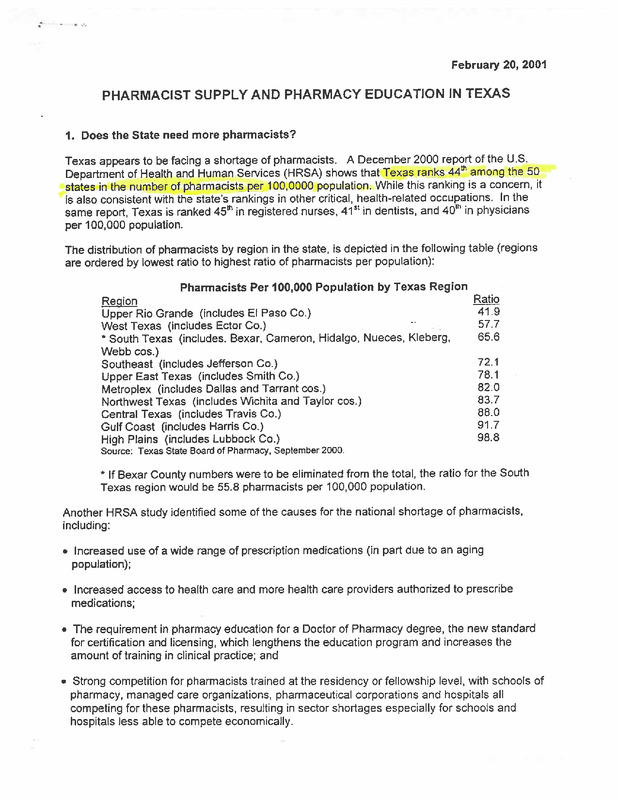
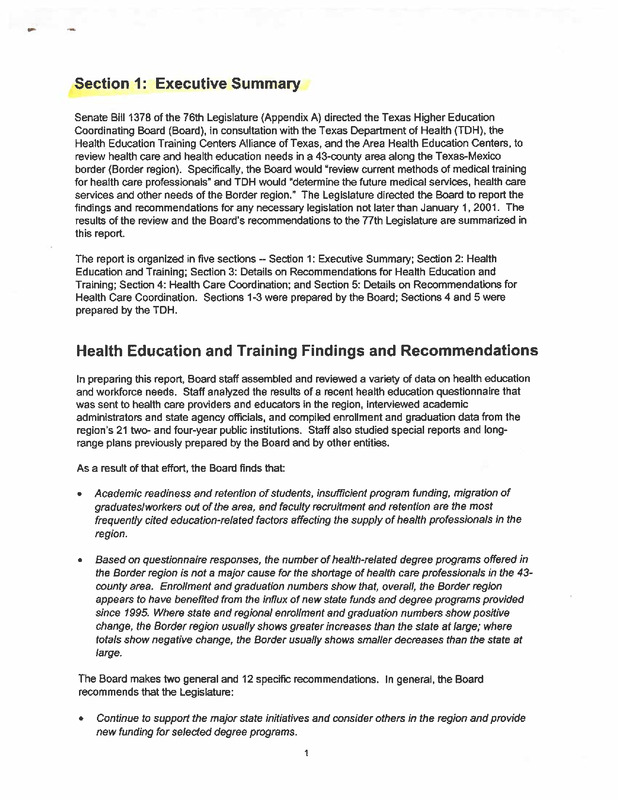
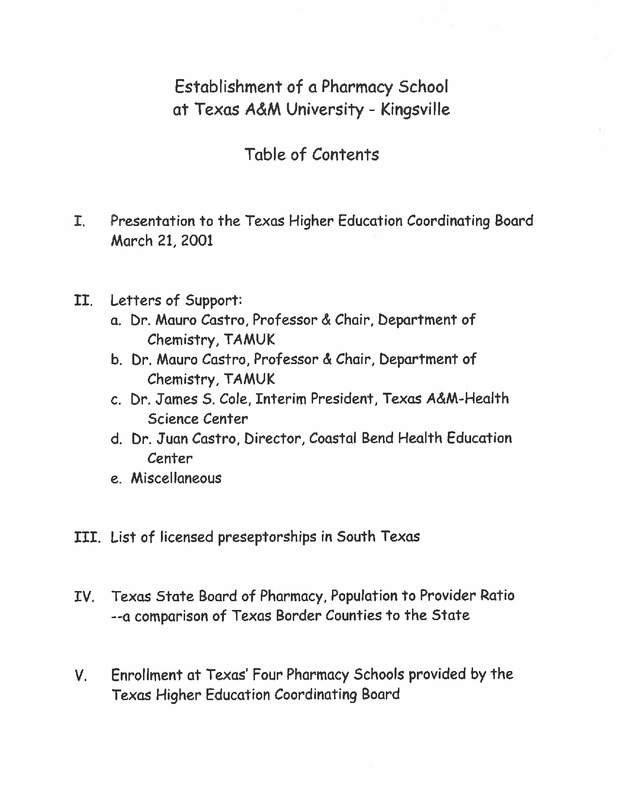
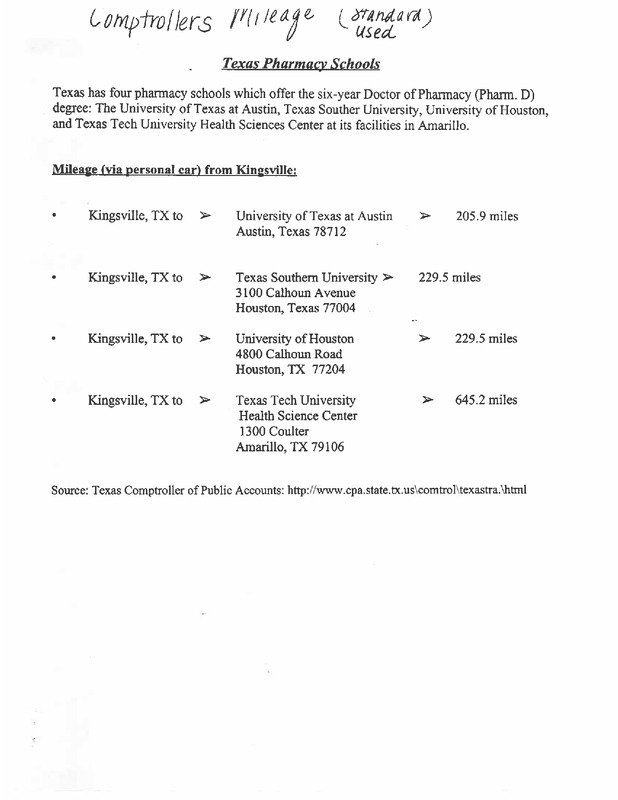
This establishment did not happen overnight—it required significant effort and dedication. From data reports and community support letters to workforce development, funding, and many other contributing factors, each played a vital role in making this vision a reality. Today, we will review primary resources that highlight the efforts and initiatives that brought this College to life.
Texas A&M University Irma Lerma Rangel School of Pharmacy (n.d.) explains the history of the program that addressed a shortfall of as many as 157,000 pharmacists nationwide is predicted by the year 2020, according to the Pharmacy Manpower Project Inc. A report by the Texas Department of Health Education and the Texas Higher Education Coordinating Board indicates the Texas-Mexico border region has a population-to-pharmacist ratio of 1,700 to 1, 32 percent above the statewide ratio.
Recognizing this critical need, State Representative Irma Lerma Rangel made it her mission and achieved the goal of establishment of the first professional health school in South Texas. Her efforts culminated in House Bill 1640, passed in 2001, which authorized the creation of the college and secured tuition revenue bonds for construction.


Transfer the College of Pharmacy at TAMUK to the Health Science Center
As the House Bill 1040 was passed, but funding was limited. University officials asked for about $13 million in emergency appropriations from the legislature for operational costs for the 2006-2007 biennium. Although $10 million was included in the supplemental appropriations bill, at adjournment, funding was denied. (Texas A&M University Irma Lerma Rangel School of Pharmacy, n.d.)
In 2004, The Texas A&M University System Board of Regents committed $3.1 million to hire the initial cohort of faculty and prepare for full accreditation for the pharmacy school. Again though, a lack of state funding for operations delayed the planned fall 2005 opening until fall 2006. (Texas A&M University Irma Lerma Rangel School of Pharmacy, n.d.)
Following approval of The Texas A&M University System Board of Regents and the Texas Higher Education Coordinating Board, the Texas A&M Irma Lerma Rangel College of Pharmacy officially joined the Texas A&M University Health Science Center in April 2006. Classes for the first 70 students in the school, on the Texas A&M University-Kingsville campus, began in August 2006. (Texas A&M University Irma Lerma Rangel School of Pharmacy, n.d.)
The Irma Lerma Rangel College of Pharmacy was established to address significant gaps in healthcare services and healthcare education—two major concerns that had to be demonstrated to stakeholders before the school could be created. As shown in the primary sources, numerous data reports were prepared, and gaining community support was also essential. Even after presenting this information, the College faced challenges related to securing funding. Advocates for its creation had to engage with lawmakers and policymakers, seek votes, and continually address these concerns.
In A Perfect Mess, Labaree discusses the public and private benefits of higher education. He argues that when higher education demonstrates an overall benefit to the public good—ultimately benefiting society as a whole—educational policymakers are more likely to support it. Labaree notes that policymakers deliberately seek to shape education to effectively address urgent social problems. The proposal to establish the College of Pharmacy exemplified this principle by aiming to solve a critical healthcare issue.
Establishing a pharmacy program in South Texas is a pivotal step toward addressing regional healthcare needs and health education access. By creating this program, the region can create these health profession that will return to the rural community to servie. This can foster interdisciplinary collaboration across nursing, medicine, dentistry, and other allied health fields. This initiative not only strengthens the healthcare workforce but also drives economic growth and enhances the overall quality of care for underserved communities—positioning South Texas as a leader in health education and innovation.
References
- Labaree, D. F. (2017). A perfect mess: The unlikely ascendancy of American higher education.
University of Chicago Press. -
Texas A&M University Irma Lerma Rangel School of Pharmacy. (n.d.). History. Texas A&M University. https://pharmacy.tamu.edu/about/history.html