
The Politics of Education Reform
This exhibit highlights some of the challenges faced by the Latinx community in Texas and beyond during the early and mid-1970s in creating educational reform in the state. As you scroll through the images, you will see how political processes were used to push reform through, but also how perceptions, both public and private, underscored the difficulty of furthering equality in educational access.
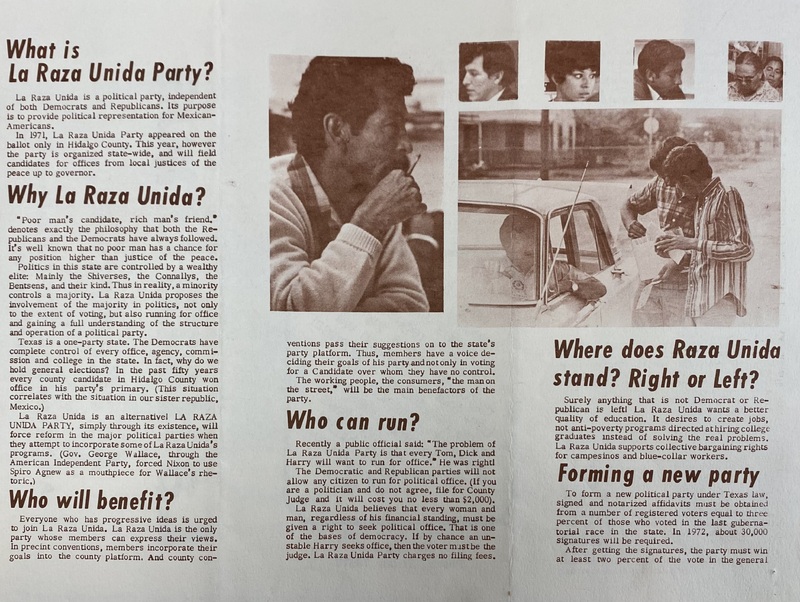
La Raza Unida Party (RUP) promotional material
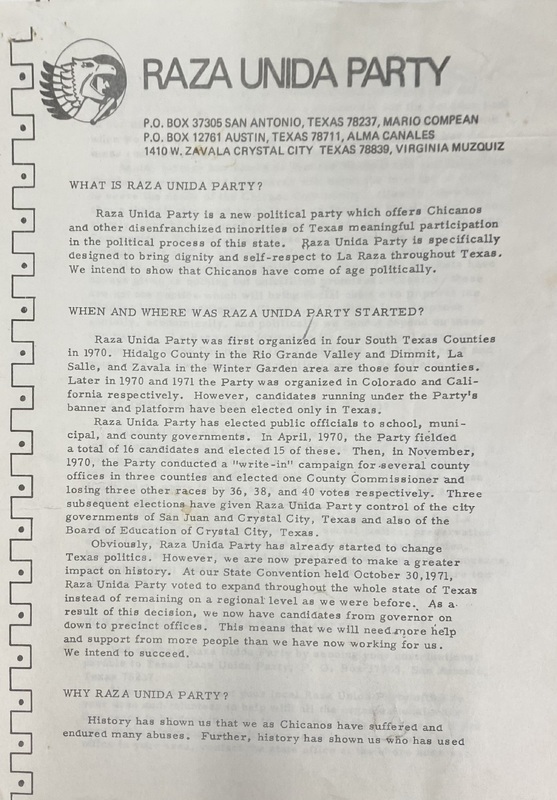
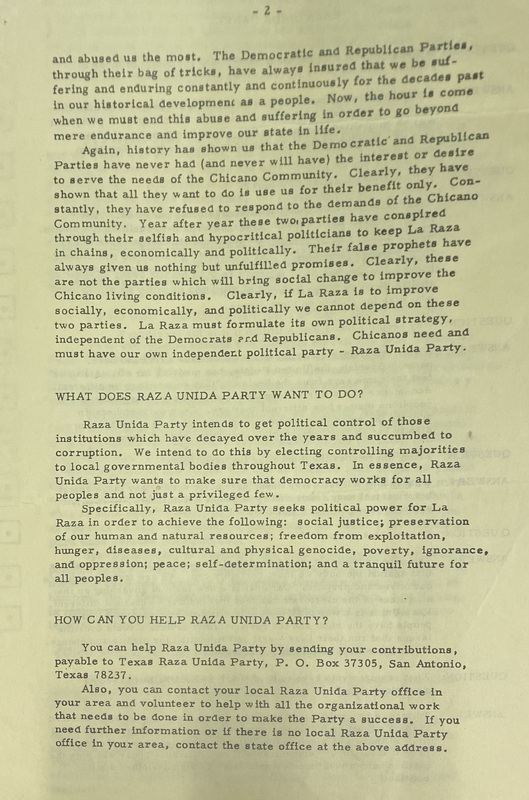
La Raza Unida Party (RUP) began in Crystal City, Texas in 1971 as a third party option for Latinxs who felt misrepresented by the two dominant American political parties and their leadership. Above, the advertisement explains a key goal of the RUP, which was to establish better quality education, specifically for the Mexican-Americans in Texas. Below, the party platform and some candidates are explained in greater detail.
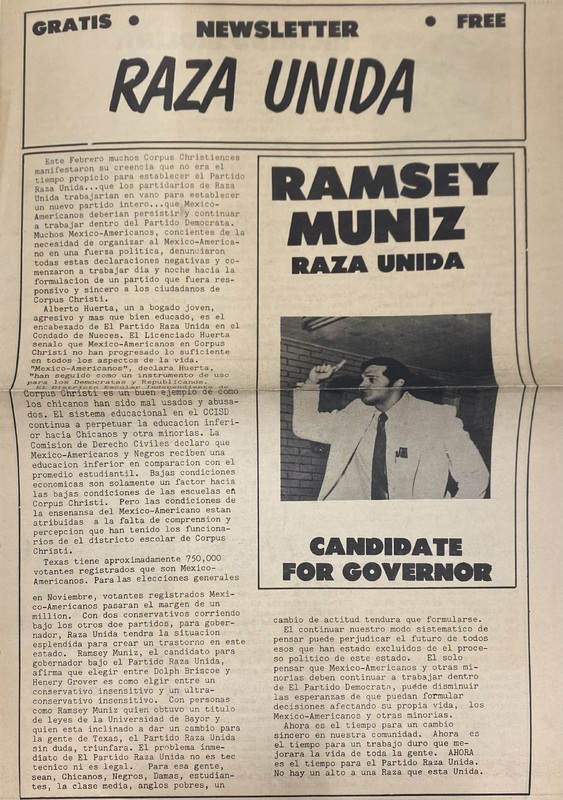
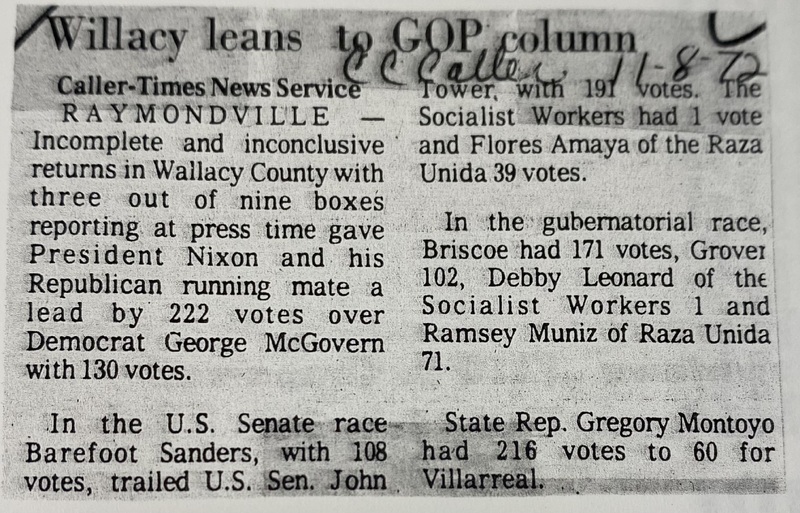
La Raza Unida votes in 1972 election
Creating a third party in American politics is a powerful statement of resistance for constituents who feel their needs are not being addressed. However, political participation among Latinxs at this time demonstrates the challenge faced by the RUP to get their candidates into office. While voting for RUP candidates showed promise in the 1972 election, the analysis here shows how little faith in the process many minority communities held at the time.
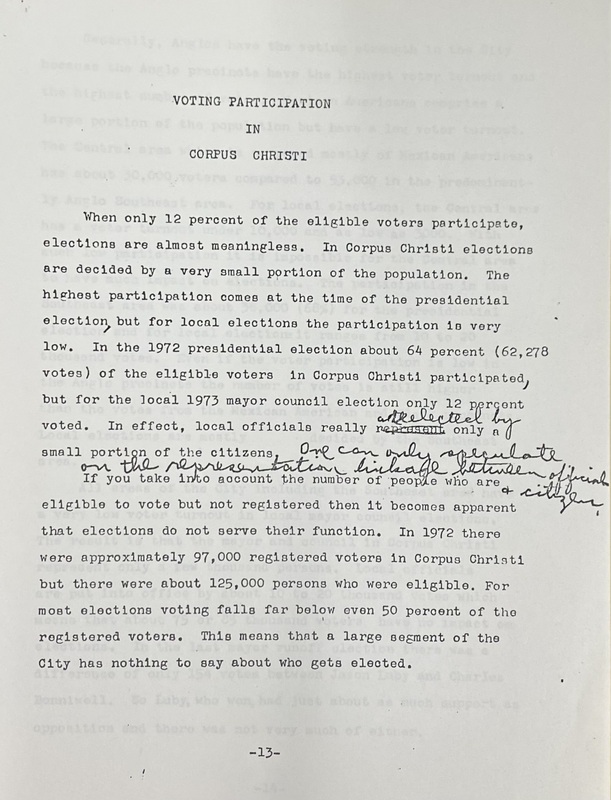
Corpus Christi bond election, 1972
This analysis of the Corpus Christi bond ballot, part of the national election cycle that year, compares voting participation against other election cycles in which disproportionate numbers of primarily Latinx voters did not participate. Bond proposition #1, which was for $1.5M funding for upper-division higher education facilities in Corpus, garnered especially high support and turnout from the Latinx communities in Corpus, though, which reinforces the stated goals of the RUP.
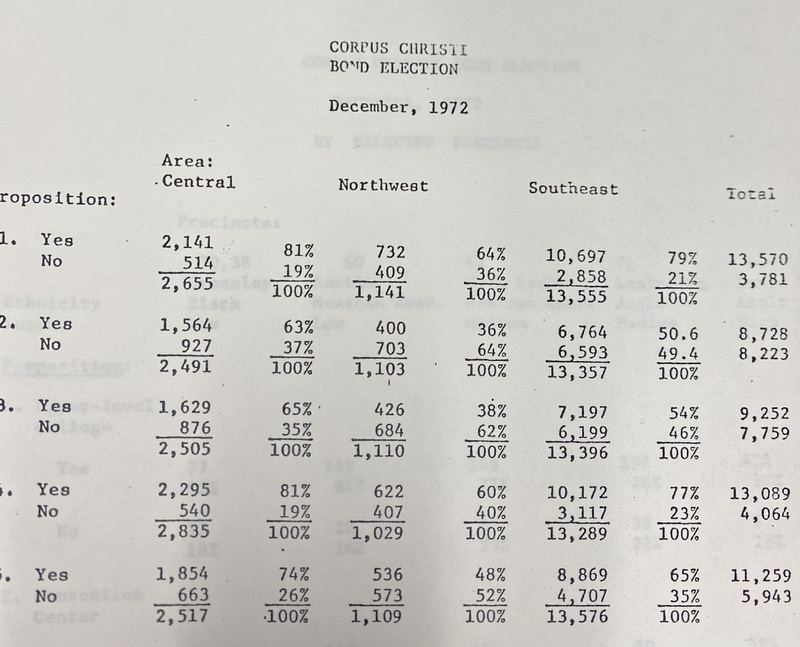
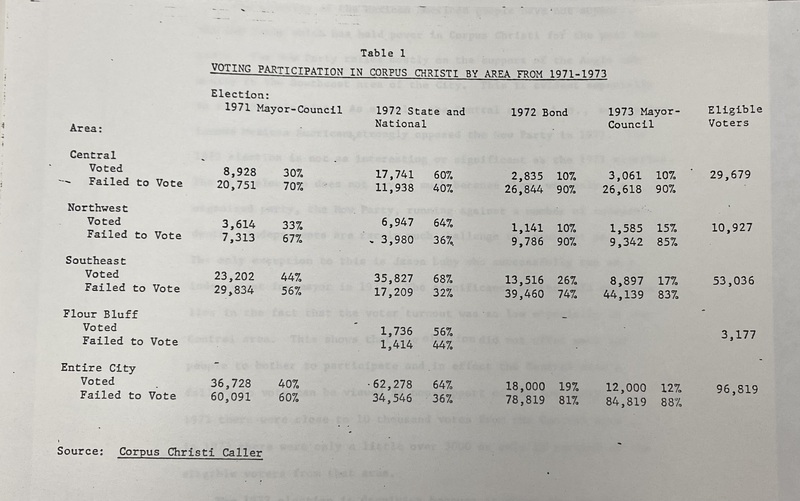
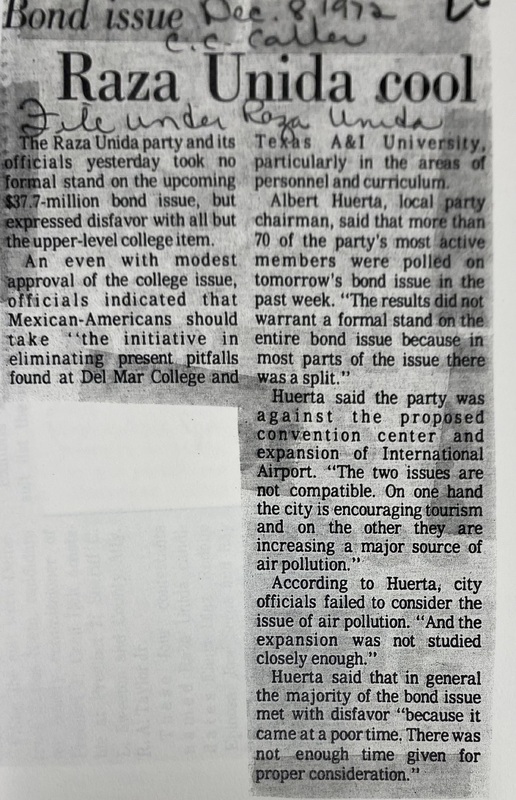
Raza Unida cool on bond issue
RUP leadership didn't take an official stand on the bond proposals, because the non-educational items conflicted with party goals.
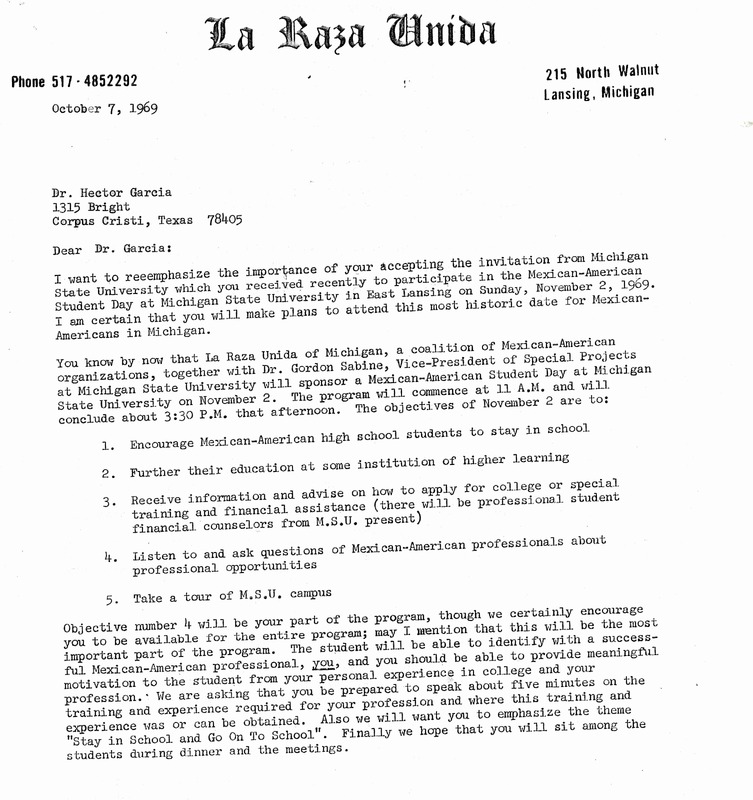
Invitation from La Raza Unida to Dr. Hector P. Garcia
An invitation to Dr. Hector P. Garcia to represent successful Mexican-Americans in higher education was sent by La Raza Unida coalition (a precursor to the RUP in Texas) chapter in Michigan, enticing him to help spread efforts for reform at Michigan State University. Dr. Garcia's status in Texas and nationally, gave him political clout that was recognized by both the Latinx community and by the two major parties who sought the Latinx vote.
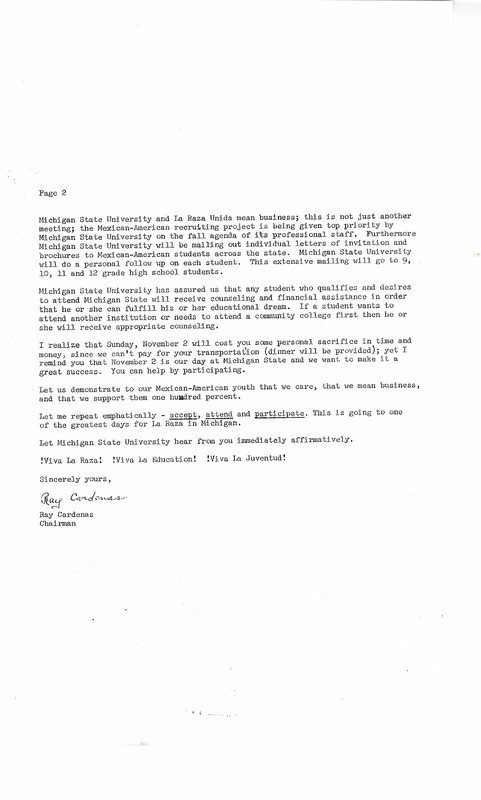
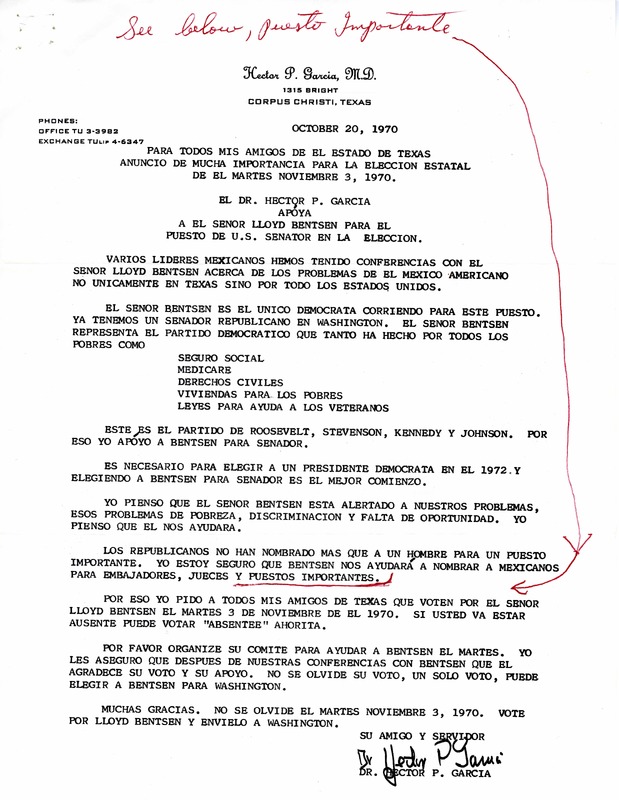
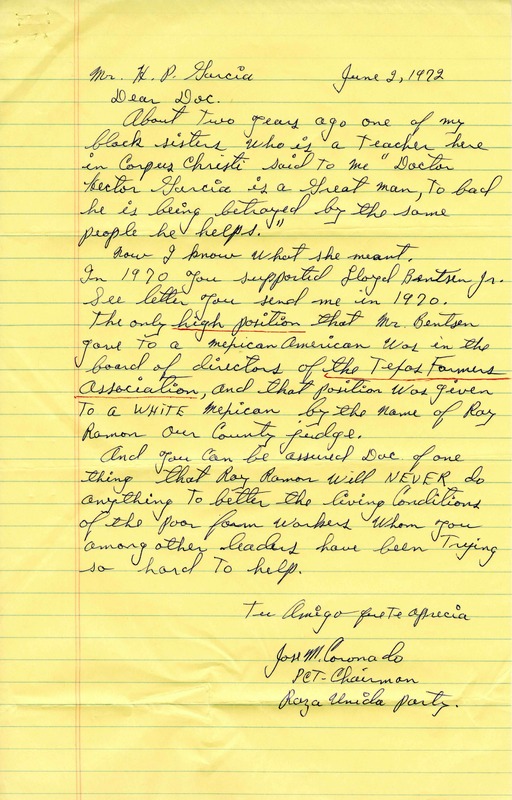
Letter of support for Lloyd Bentson for U.S. Senate, written by Dr. Hector P. Garcia
Dr. Garcia's support for candidates in the major American political parties, however, was sometimes at odds with RUP goals for establishing reform through political power, rather than representation from supportive white candidates. In these two letters, the election of Lloyd Bentson to Senate is both promoted by Dr. Garcia and also criticized by members of his community.
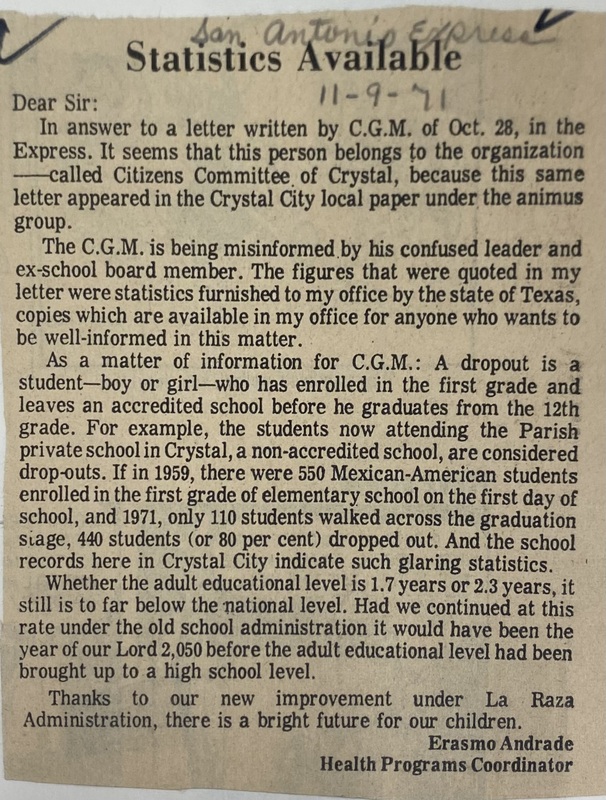
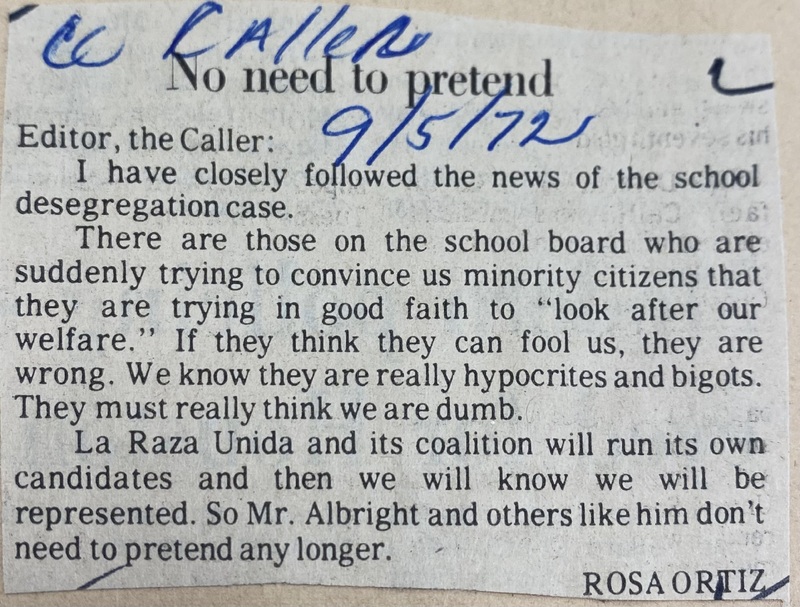
In general, the discord in the Texas Latinx community about how best to achieve their goals often became divisive. Many community members used letters to the editor of local newspapers to express their perspectives, as seen below.
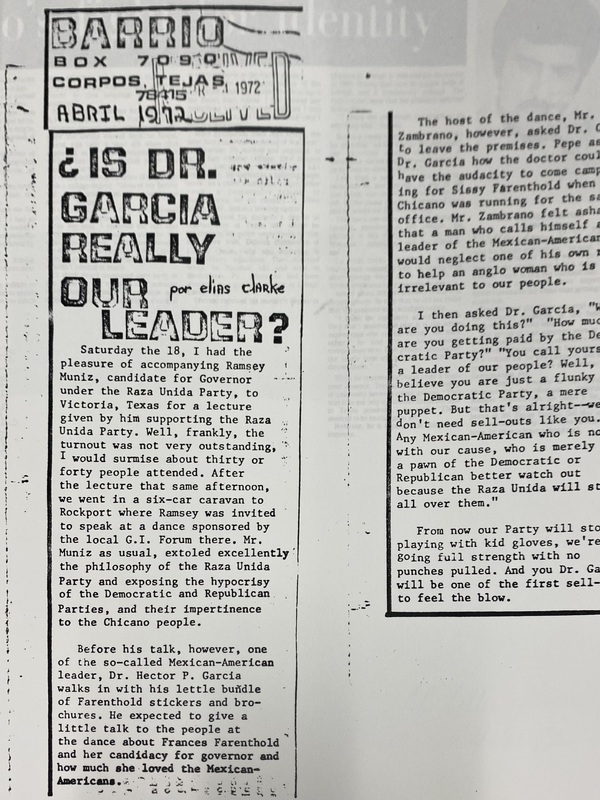
Is Dr. Garcia Really Our Leader?
Some community members questioned the strategies of Dr. Garcia and whether they undermined the RUP.
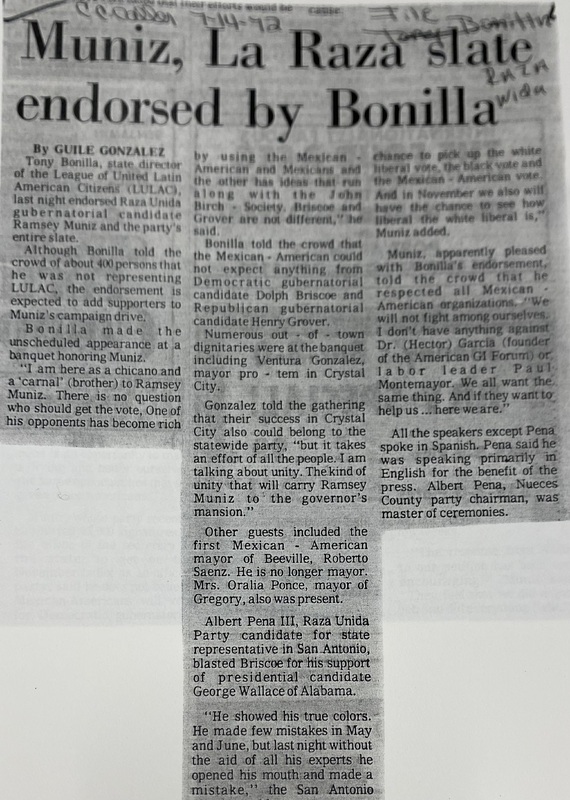
Muniz, La Raza slate endorsed by Bonilla
Even the director of LULAC, the organization Dr. Garcia founded, endorsed the RUP candidates in opposition to Dr. Garcia's recommendations.
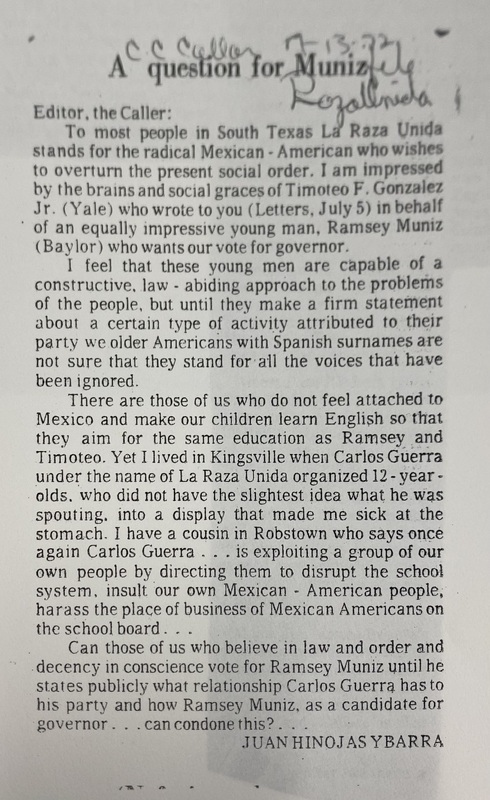
A Question for Muniz
Some members of the community had concerns about the tactics and leadership in the RUP, though.
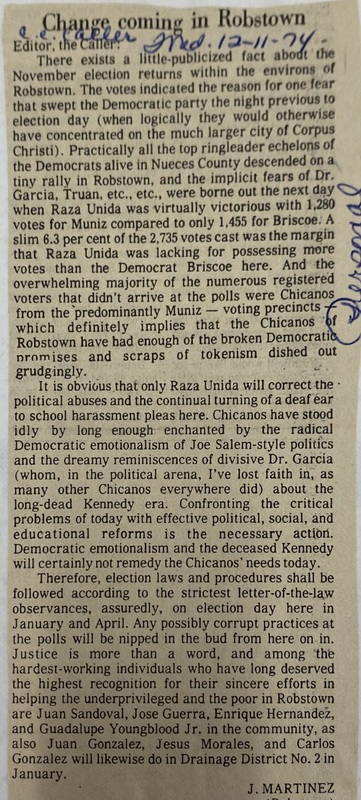
Change Coming in Robstown
Locally, voters in Robstown seemed to identify more closely with the strategies of RUP than with Dr. Garcia's recommendations.
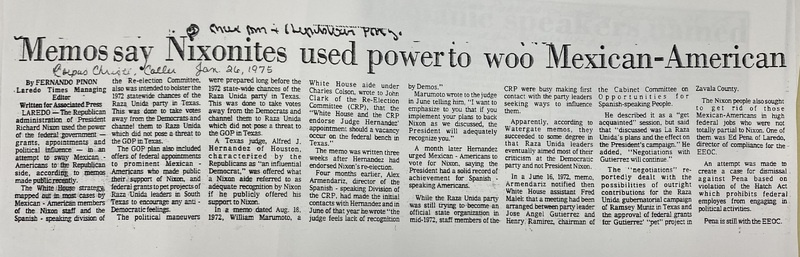
Memos Say Nixonites used power to woo Mexican-American vote
Strategies to leverage Mexican-American votes away from RUP candidates made it difficult for reform to head in any specific direction.
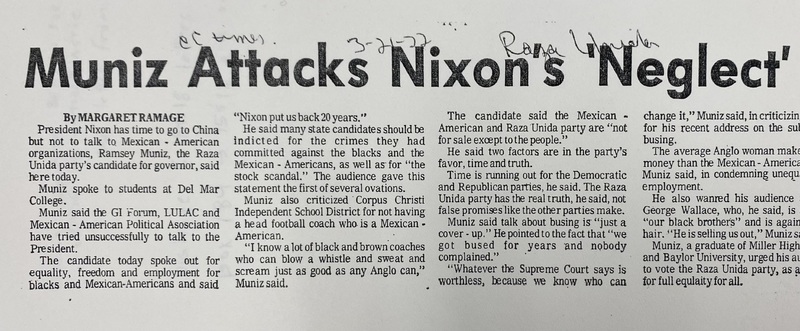
Muniz Attacks Nixon's Neglect
Gubernatorial candidate Muniz recognized the deceptive nature of political positioning and fought to keep RUP goals at the forefront.
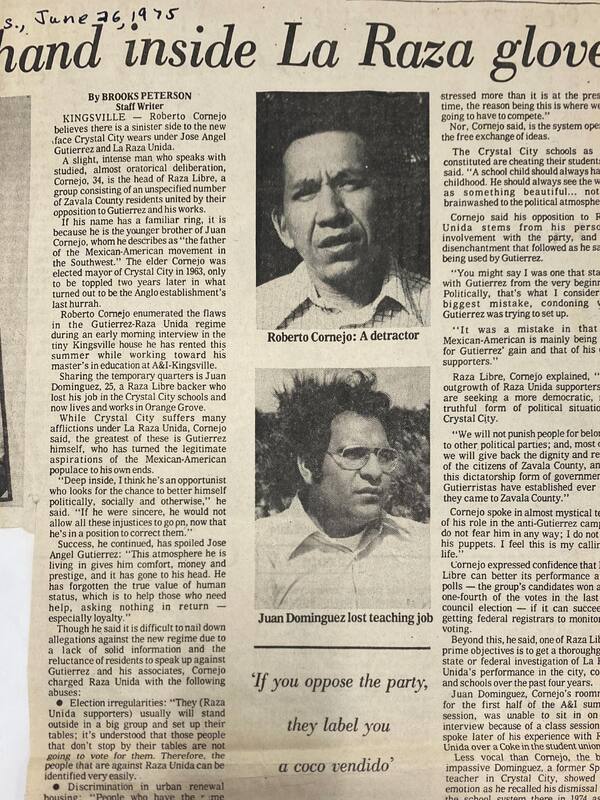
A hand inside La Raza glove
Turmoil within the RUP led to changes in perception about the effectiveness of a separate party. With a community divided, reform seemed more difficult than ever.
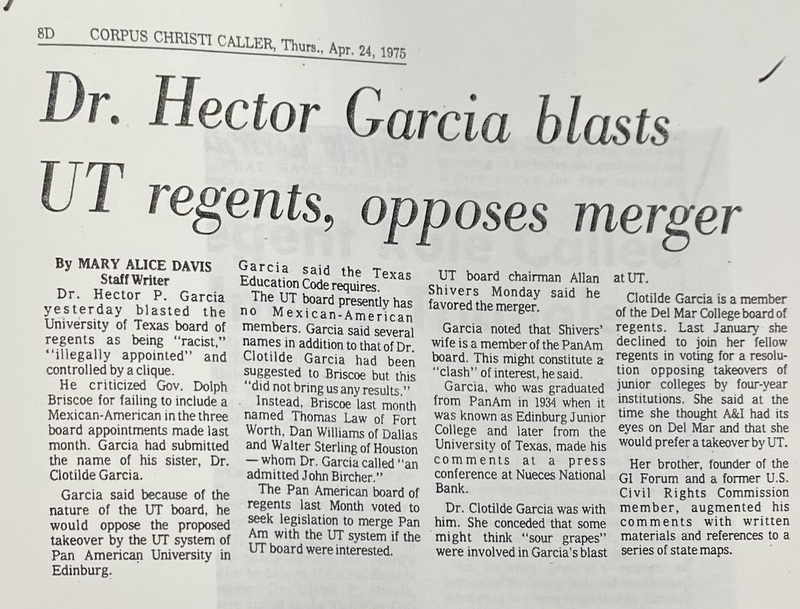
Dr. Hector Garcia blasts UT regents, opposes merger
Dr. Garcia also recognized the complexities of reform, taking issue with the makeup of the school board proposal to merge Pan American University in Edinburg with the University of Texas system. His critique is largely because of the lack of Mexican-American representation on the board, which seems to echo concerns raised by the RUP.
Ultimately, the RUP ended in 1978. After failing to secure officials in all but local elections, then asking Dr. Hector P. Garcia to run as an RUP candidate and being rejected, the party lost favor and broke apart. The South Texas/ Border Initiative was achieved through legal action nearly a decade later, which begs the question of whether political action could have ever accomplished what legal action finally did. The goals of the RUP and Dr. Garcia, along with his organization LULAC, all highlight the need for educational reform for Latinxs in Texas at the time, but the complexities of campaigns and public perceptions of them seem to have limited the ability to accomplish those goals for the RUP. By examining the shifting allegiances and influences of these historical entities, we can at least see how the American system of governance both gives voice to community desires and also creates impediments to successful reform.